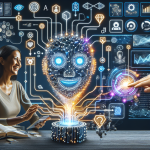
As technology evolves, so do the capabilities within the realm of artificial intelligence (AI) and machine learning (ML). One standout innovation is Generative Adversarial Networks (GANs), a class of neural networks that has revolutionized image synthesis. For founders and CXOs of startups and mid-sized companies, understanding GANs can unlock numerous possibilities for innovation and competitive advantage.
In this article, we’ll delve into the mechanics behind GANs, their applications, potential challenges, and considerations for implementing this technology in your business landscape.
Understanding Generative Adversarial Networks
First introduced by Ian Goodfellow and his colleagues in 2014, GANs have quickly garnered attention for their impressive capability to generate realistic images. GANs consist of two neural networks—the Generator and the Discriminator—that work in tandem but with opposing goals.
1. The Anatomy of a GAN:
Generator: The role of the generator is to create new data instances, aiming to generate images that are indistinguishable from real images.
Discriminator: The discriminator’s job is to classify images as either real (from the training dataset) or fake (generated by the generator).
This adversarial process creates a feedback loop where both networks influence each other’s learning. The generator improves its capabilities to produce more convincing images while the discriminator enhances its accuracy in differentiating between real and fake images.
2. The Training Process
The training process is iterative and requires large datasets to be effective. The two networks are pitted against each other in a zero-sum game:
- The generator aims to minimize the probability of the discriminator identifying its images as fake.
- The discriminator seeks to maximize its accuracy in distinguishing real from fake.
Given enough iterations, ideally, the generator will produce images so close to reality that the discriminator struggles to tell the difference.
Applications of GANs in Image Synthesis
In the context of business and technology, GANs can be transformative, offering various applications that can be beneficial for startups and mid-sized companies:
1. Content Creation and Marketing
GANs can automate the generation of high-quality images for marketing materials, social media, and digital campaigns. By synthesizing images aligned with your brand’s aesthetic, organizations can reduce costs associated with hiring professional photographers or purchasing stock images.
2. Product Design and Prototyping
For companies in the design and manufacturing sectors, GANs facilitate rapid prototyping. By generating design variations, companies can evaluate aesthetics, functionality, and customer feedback in a fraction of the time traditionally required.
3. Gaming and Virtual Reality
In industries like gaming, GANs are used to create realistic environments and characters, enhancing the user experience. By synthesizing high-resolution images in real-time, developers can craft immersive worlds while saving resources.
4. Healthcare and Medical Imaging
GANs can synthesize medical imaging data, crucial for training diagnostic algorithms where patient data might be limited. By generating training data that closely mirrors real cases, healthcare startups can develop more robust diagnostic tools.
5. Fashion and Retail
GANs have found applications in virtual try-on technology. By generating images of individuals in various outfits, retailers can enhance online shopping experiences, allowing customers to visualize clothing without physical try-outs.
Challenges and Considerations
1. Complexity in Training
Training GANs is a complex and resource-intensive task. Generators and discriminators need careful calibration, as imbalances can lead to suboptimal results. Often times, if the discriminator becomes too good, the generator fails to learn and vice versa.
2. Mode Collapse
One of the common issues faced while training GANs is mode collapse, where the generator produces a limited variety of outputs. This can lead only to several similar images being generated, limiting diversity.
3. Ethical Implications
The ability of GANs to create indistinguishable fake images raises ethical concerns, particularly in areas such as deepfakes. Companies should consider the ethical implications of their usage and seek to navigate this landscape responsibly.
4. Interpretability
The black-box nature of GANs can be a barrier to adoption. For founders and CXOs, understanding and interpreting the decision-making process of these models can be fundamental for building trust internally and with customers.
Implementing GANs in Your Organization
If your organization is considering integrating GAN technology, here are essential considerations to keep in mind:
1. Identify Use Cases
Understanding the specific applications relevant to your industry is crucial. Collaborate with technical experts to assess areas where GANs can add value.
2. Invest in Talent
Building an in-house team with expertise in AI and ML can drive successful implementations. Alternatively, consider partnerships with external firms specializing in GAN technology.
3. Leverage Existing Frameworks
There are numerous open-source GAN implementations available, such as TensorFlow and PyTorch. Leveraging these frameworks can significantly shorten development time while reducing costs.
4. Monitor and Evaluate Performance
It’s essential to continuously monitor the performance of your GANs. Employ metrics that measure image quality and alignment with business objectives.
5. Address Ethical Concerns
Establish guidelines and protocols to ensure ethical usage. By being proactive in understanding the implications of AI-generated content, your company can avoid pitfalls and build a reputation for responsible innovation.
Future Trends in GANs for Image Synthesis
1. Enhanced Training Techniques
As research in GANs progresses, new methodologies for training may emerge, potentially eliminating common issues such as mode collapse and training instability. Founders and CXOs must stay informed about these breakthroughs.
2. Multi-modal GANs
Future generations of GANs may incorporate multi-modality, allowing them to work across different data types (e.g., images, text, audio). This could lead to unprecedented capabilities in synthetic media generation.
3. Improved Accessibility
As GAN technology matures, we can expect improved tools and platforms that make it easier for startups and mid-sized companies to adopt these solutions without requiring extensive technical expertise.
4. Regulation and Governance
With the proliferation of GAN-generated content heightening ethical concerns, the establishment of regulatory frameworks governing the use of synthetic media may be on the horizon. Businesses must be prepared to comply with these changes.
Conclusion
Generative Adversarial Networks represent a significant leap forward in AI-driven image synthesis. For founders and CXOs in startups and mid-sized businesses, the potential applications of GANs can lead to greater innovation, cost-savings, and competitive differentiation. By understanding the mechanics of GANs and considering their applications thoughtfully, you can unlock powerful new possibilities for your organization.
As with any technology, successful adoption will depend on careful consideration of the ethical implications and continuous engagement with developments in the field. Embracing this transformative technology today may position your company as a leader in the ever-evolving landscape of AI and ML.